Project Libraries

A project library is a place where Zoo Design Studio keeps projects. Libraries also organize the projects you see on Home.

On desktop, there are two choices:

  • Directory keeps projects in a folder you choose on your computer. These projects are local and are not uploaded to Zoo.
  • Personal Cloud stores projects in your Zoo account so you can open them on other devices and in the browser. Zoo Design Studio also keeps a local working copy while you edit on desktop.

These are separate locations. Adding a Directory library does not sync its projects. To start syncing a Directory project, move it to Personal Cloud.

Only projects in Personal Cloud sync to your Zoo account. Directory projects remain local-only.

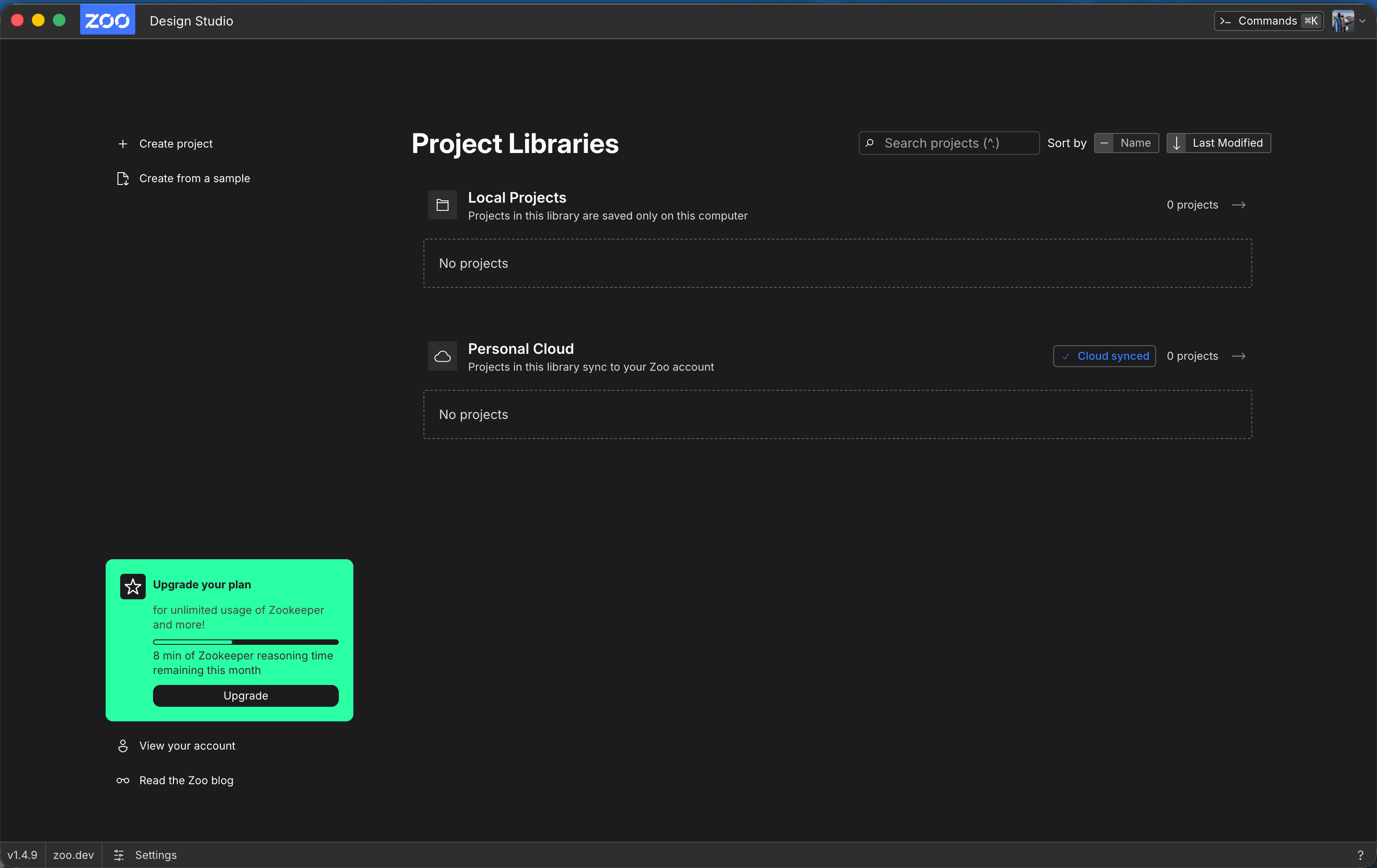
Zoo Design Studio adds Personal Cloud automatically for signed-in users with Cloud Sync; you do not need to create it yourself. On desktop Home, its cloud icon and zoo://personal address distinguish it from Directory libraries, which have folder icons and normal paths on your computer. In the browser, Personal Cloud is the default project library and may open directly.

Home showing a Directory library with a folder icon and local path beside Personal Cloud with a cloud icon and zoo://personal address

Choose a Library

Zoo Design Studio currently supports two library types.

LibraryWhere the project livesUse it when
DirectoryIn a folder you choose on this computer.You want local-only work, a specific folder, or a Git workflow.
Personal CloudIn your Zoo account, plus a working copy on the device where you open it.You want the project in the browser or on multiple devices.

Directory Libraries

A Directory library points to a normal folder on your computer. Each project is a subfolder inside that library folder. A Directory project stays in that folder and is not uploaded to Zoo.

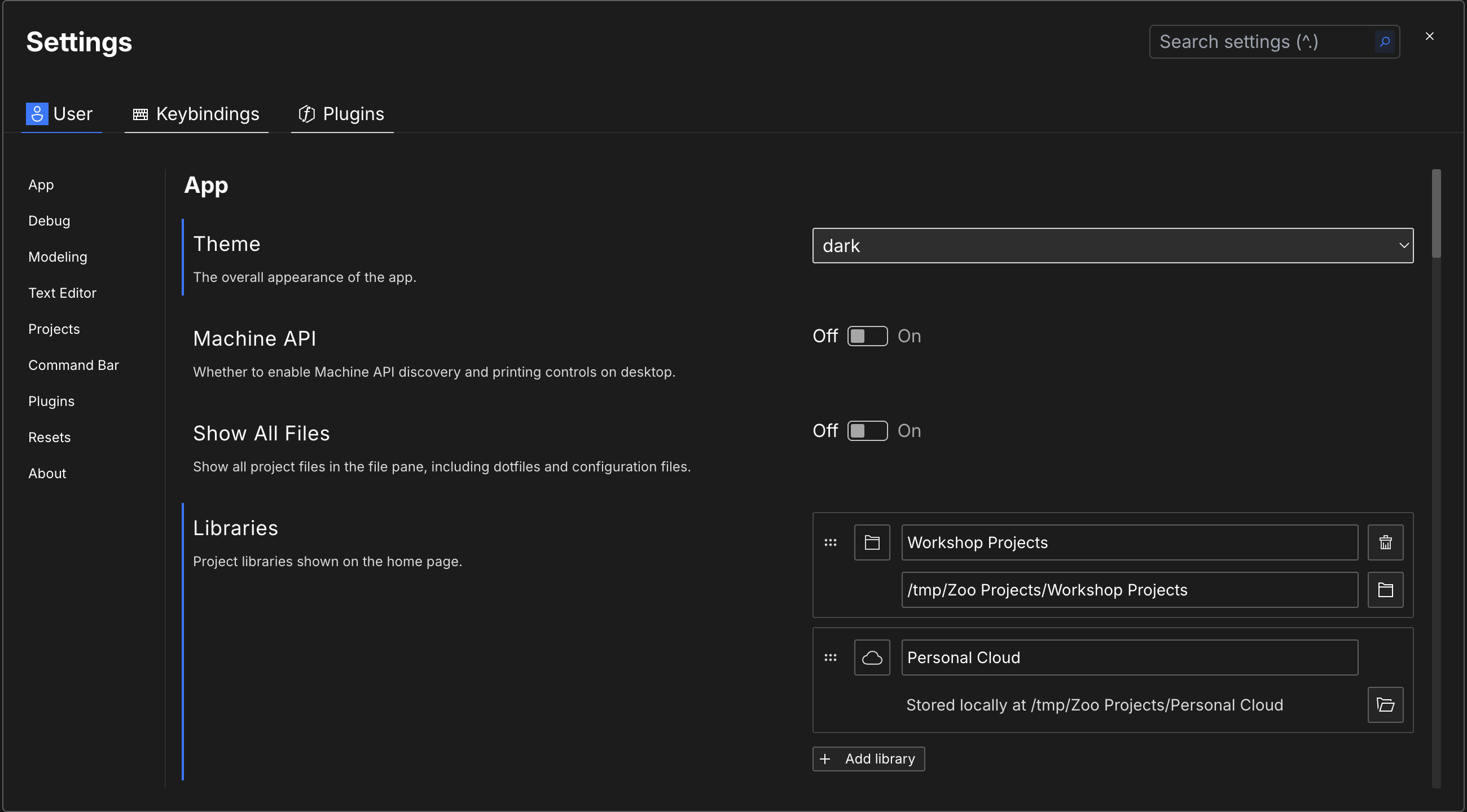
Directory libraries are available in the desktop app. Under Settings > User > App > Libraries, you can add more than one, rename them, choose different folders, reorder them, or remove them from Home. Changing a library path changes which folder Home scans; it does not move projects. Removing a Directory library does not delete its folder or projects on disk.

Zoo Design Studio projects remain normal, readable files. You can open a Directory project in a text editor, search it, copy it, version it with Git, or use it with other filesystem tools.

Personal Cloud

Personal Cloud stores projects in your Zoo account.

On desktop, Personal Cloud uses its own managed folder, separate from your Directory libraries. When you create or open a cloud project, Zoo Design Studio puts a working copy in that folder and syncs your changes in the background. The Personal Cloud settings row shows the folder's path and can reveal it in your file explorer.

Some Personal Cloud projects may appear before they have been opened on the current device. These are cloud-only entries. Opening one downloads the project first, then opens the local working copy.

User App settings showing an editable Directory library and the Personal Cloud local storage path

Use Project Libraries

Browse Libraries on Home

With multiple libraries, Home shows a Project Libraries overview in configured order. Select a library to see all of its projects, then use All libraries to return to the overview. With only one configured library, Home goes directly to that library's projects.

Create a Project in a Library

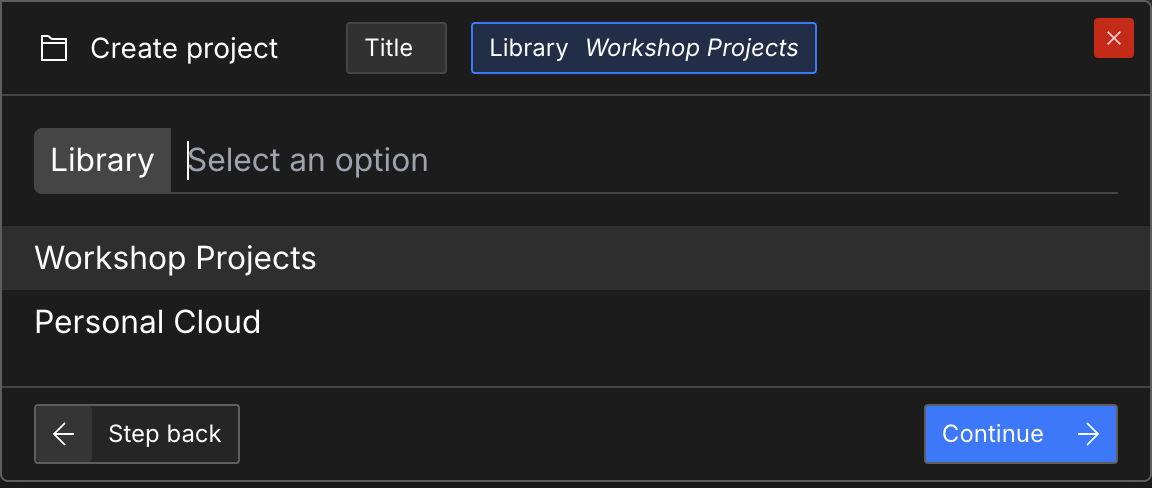
From Home, choose Create project. If more than one writable library is available, the Create project command includes a Library field.

Creating a project in a Directory library creates a new folder inside that Directory library's path. Creating a project in Personal Cloud creates a local cloud working copy and starts cloud sync when sync is enabled.

Create project command showing Workshop Projects and Personal Cloud as library choices

Move Projects Between Libraries

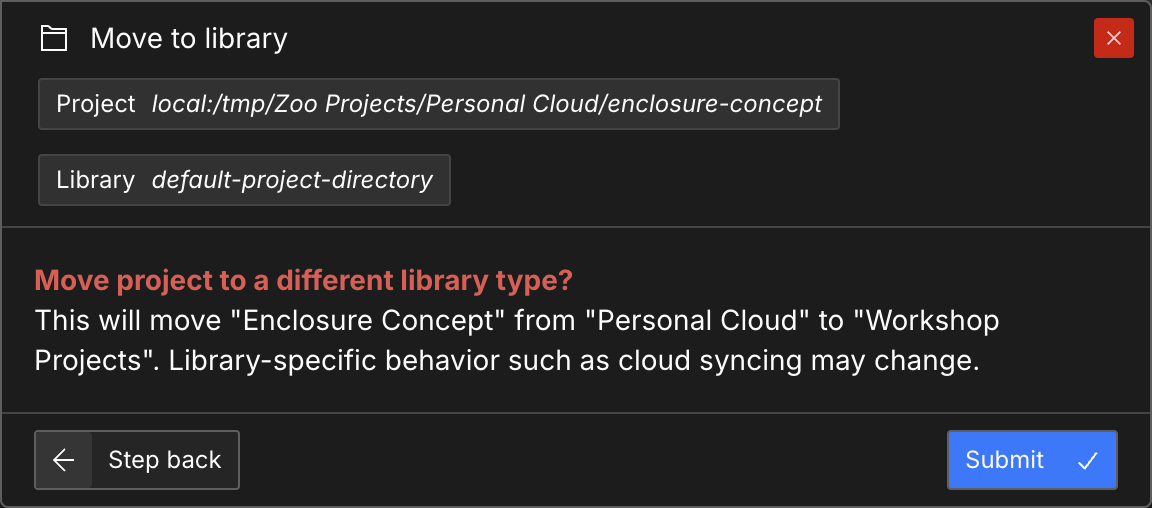
Use Move to library to change where a project lives. You can start this from the Command Bar, the project menu in the top bar, or a project card's context menu on Home.

  1. Select Move to library.
  2. Choose the project.
  3. Choose the destination library.
  4. Confirm the move.

The result depends on the source and destination:

  • Directory to Directory moves the project folder between local library paths.
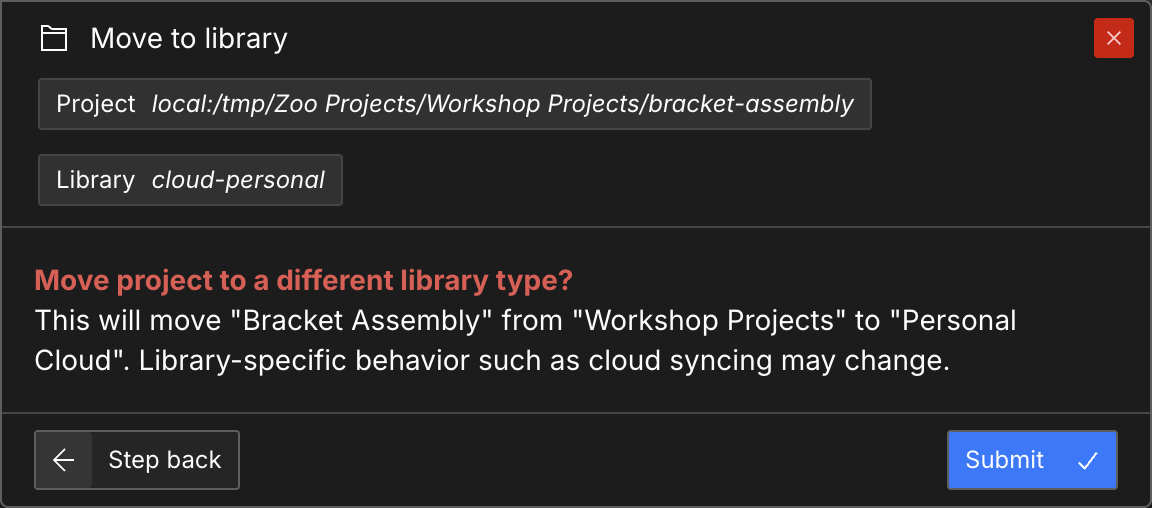
  • Directory to Personal Cloud moves it into managed cloud storage and starts cloud sync.
  • Personal Cloud to Directory deletes the remote cloud project, disconnects the local copy, and moves that remaining folder to the Directory library.

A cloud-only project must be opened before it can be moved. Moving out of Personal Cloud also requires Cloud Sync to be enabled.

Important: Moving out of Personal Cloud is a permanent remote deletion, not a way to retain both copies. If Zoo Design Studio cannot delete the remote project, the move fails and restores the cloud link.

This is the preferred way to move projects between libraries. It lets Zoo Design Studio update the project files, library membership, and cloud sync metadata together.

Move to library review for moving a Directory project into Personal Cloud

Move to library review for moving a Personal Cloud project into a Directory library

Delete a Project

Deleting a project follows the library it belongs to:

  • Deleting from a Directory library removes the local project folder.
  • Deleting a cloud-backed copy from a Directory library removes the selected folder but keeps the cloud project. Other local folders with the same cloud identity may be removed if they are exact duplicates or disconnected if they differ.
  • Deleting from Personal Cloud deletes the cloud project and removes the local working copy on the current device when one exists.

Read the confirmation dialog before deleting. Project deletion is permanent and has no undo.

Advanced Details

Desktop and Browser Differences

On desktop, Zoo Design Studio can show Directory and Cloud libraries side by side. This lets you keep local-only work, Git-based work, and cloud-backed work in one Home view.

In the browser, Zoo Design Studio uses Personal Cloud. Its working copy lives in browser storage, not in a normal folder that you can manage in Finder, File Explorer, or a terminal. You can edit the library's display title, but you cannot add or reorder libraries or change their type or storage location.